Posted on 9/25/2026
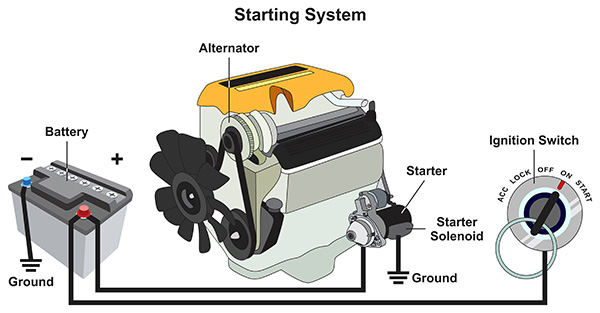
A grinding noise when you turn the key or press the start button is one of those sounds that immediately gets your attention. Sometimes the engine still starts normally. Other times the noise gets worse over a few days until the starter struggles to engage at all. The important detail is when the grinding happens. A noise during cranking points us toward a different group of parts than a noise that starts only after the engine is already running. At our shop, we listen closely to the timing, length, and location of the sound before deciding what needs to come apart. The Starter Drive May Not Be Engaging Correctly The starter motor uses a small gear to engage the larger ring gear attached to the engine. When you start the vehicle, that gear has to move into position cleanly, spin the engine, and then disengage once the engine starts. If the starter drive is worn, sticking, or not moving far enough, the teeth can scrape instead of meshing correctly. That produces a s ... read more
Posted on 8/29/2026

Passing a driving test proves that a new driver understands basic traffic laws and can operate a vehicle under controlled conditions. It does not fully prepare someone for a tire failure, an aggressive driver, sudden rain, a warning light, or a vehicle that begins overheating far from home. Real driving requires judgment that develops through experience. Teen drivers can build that judgment faster by learning how the vehicle responds, recognizing early danger, and knowing when to stop instead of continuing into an unsafe situation. 1. Always Leave Yourself An Escape Route Good driving involves watching more than the car directly ahead. Look several vehicles forward, check mirrors regularly, and stay aware of open space beside the vehicle. That space may become essential when traffic stops suddenly, or another driver enters your lane. Avoid remaining beside large trucks or between vehicles for extended periods. Adjust speed slightly so there is room to move away fro ... read more
Posted on 7/31/2026
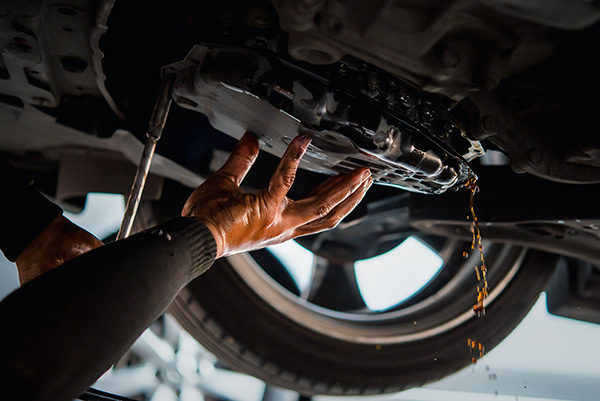
Transmission fluid has a harder life than most drivers realize. It does not just sit in the transmission like colored oil in a container. It deals with heat, friction, pressure, clutch material, metal particles, torque converter load, and thousands of shifts over years of driving. When the fluid is fresh and correct for the vehicle, it helps the transmission shift cleanly and protect internal parts. When it gets old, overheated, contaminated, or low, the transmission can start wearing in ways the driver may not feel right away. By the time slipping, harsh shifts, or delayed engagement become obvious, the fluid may have already stopped doing its job for a while. Transmission Fluid Has Several Jobs At Once Automatic transmission fluid has to lubricate bearings, bushings, gears, and shafts. It also helps cool the transmission, clean internal parts, protect seals, and apply hydraulic pressure to clutches and bands. In many transmissions, the fluid also affects how shift ... read more
Posted on 6/26/2026

Some car problems leave room to make a careful plan. Others mean the safest choice is to stop driving and get help. The hard part is knowing the difference while you are sitting on the side of the road, watching a warning light, smelling something odd, or trying to decide whether the car can make it a few more miles. Driving farther with the wrong breakdown can turn a repairable problem into major damage. It can also put you, your passengers, and other drivers at risk. When the vehicle is clearly telling you it should not keep moving, calling for a tow is the smarter decision. 1. The Engine Is Overheating An overheating engine should not be pushed down the road. If the temperature gauge climbs into the danger zone, a warning appears on the dashboard, or steam comes from under the hood, the engine is already too hot. Continuing to drive can damage the head gasket, cylinder head, seals, and internal engine parts. Turning the heater on or topping off coolant might hel ... read more
Posted on 5/29/2026
Oil choices can feel more confusing than they should. You pull into the shop or look at the service menu, and suddenly you are comparing synthetic oil, synthetic blend oil, and conventional oil, along with mileage intervals and price differences. Most drivers want to know which one is right for their engine. The answer depends on the vehicle, how it is driven, and the manufacturer's recommendations. Synthetic and synthetic blend oils both protect the engine, but they are not the same product. What Synthetic Oil Is Synthetic oil is engineered to provide more consistent protection than conventional oil. It is made with refined base oils and additives designed to better withstand heat, cold starts, friction, and contamination. That makes it a strong choice for many modern engines. Synthetic oil flows well during startup and holds up better under high temperatures. That is especially useful for engines with turbochargers, tighter internal clearances, variable valve ... read more